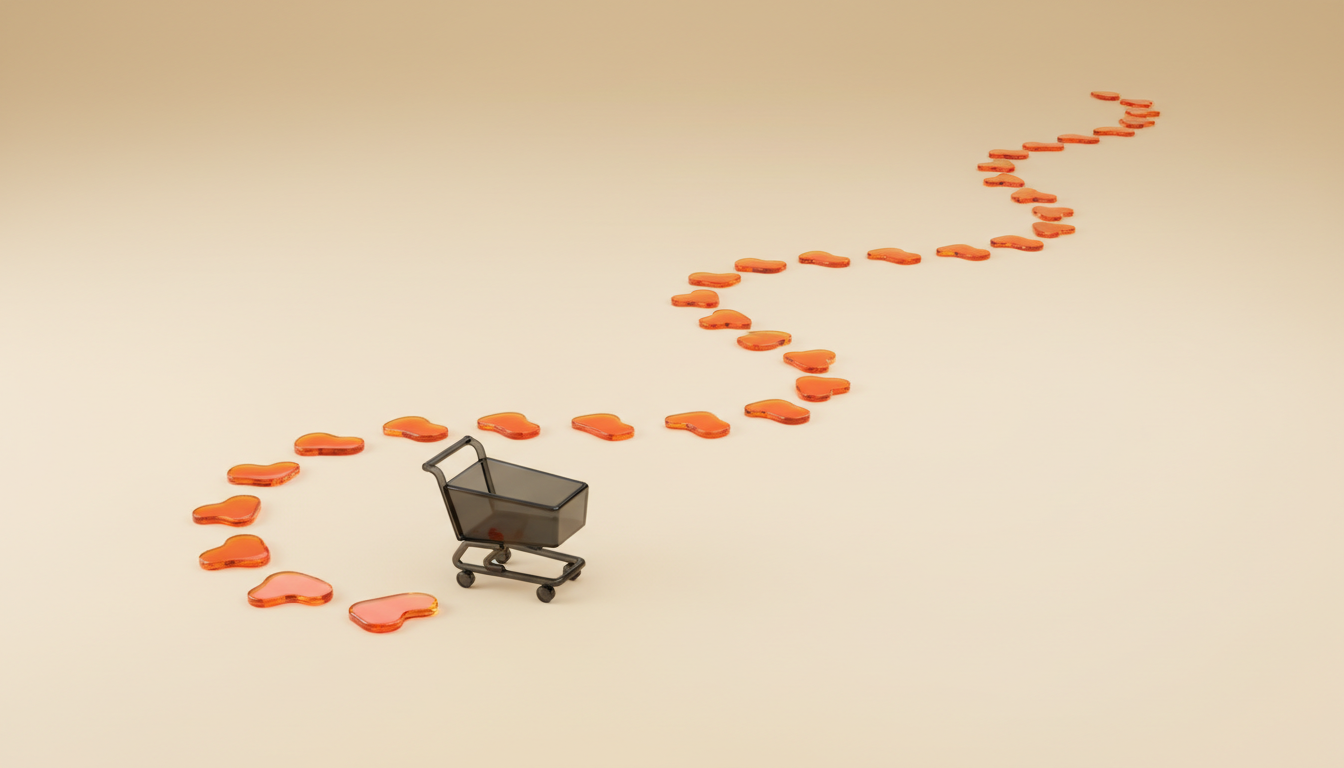
When you hear the term “consumer behavior,” what comes to mind? For most of us, it is that final moment at the checkout counter when we swipe our credit card. But in the marketing world, it is much bigger than that.
The Core Concept
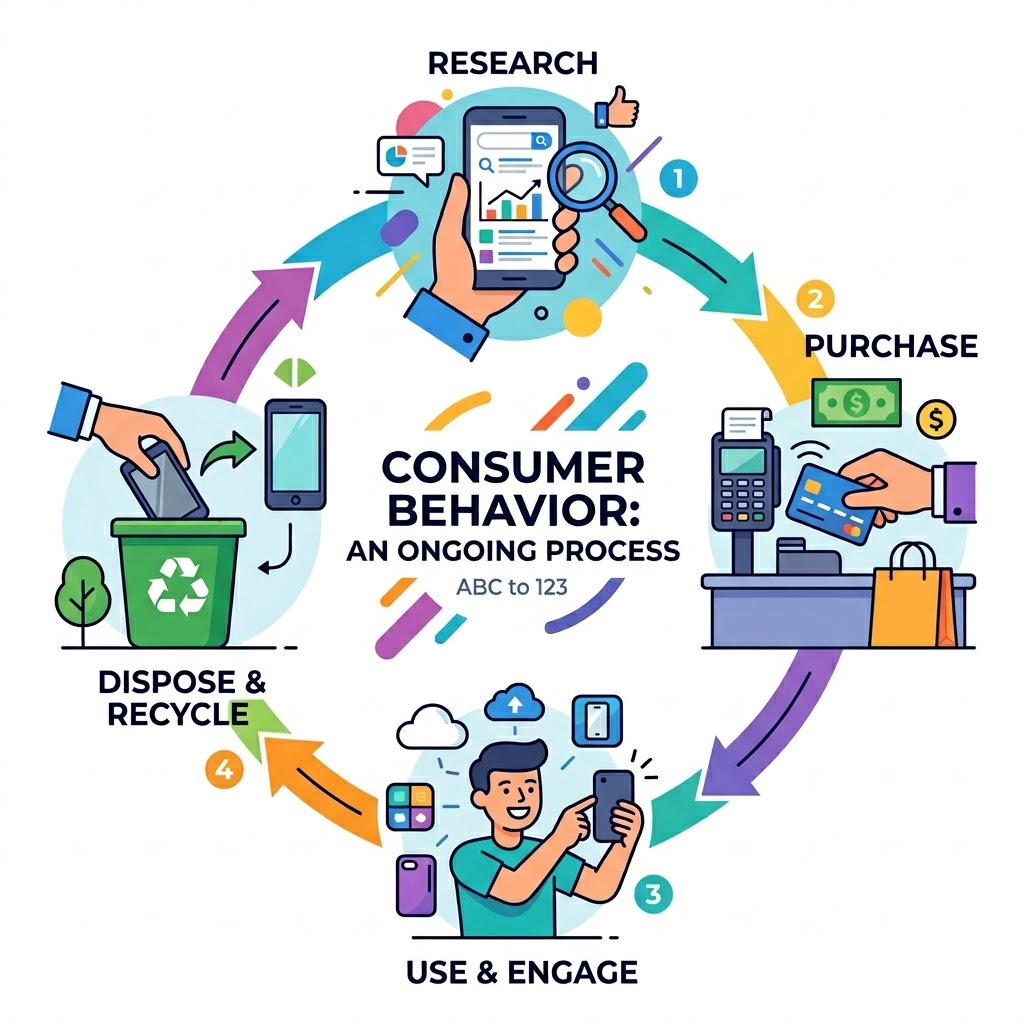
Consumer behavior is not just a single action; it is a dynamic, ongoing process. It is the complete journey of how individuals or groups select, purchase, use, and dispose of products or services to satisfy their needs. It covers everything from the moment you realize you need something, to the day you throw it away.
The Marketing Lens & ROI
Let’s apply this to a real-life example: buying a new smartphone.
The journey begins long before you enter a store. You spend weeks watching review videos and comparing prices. Then comes the “purchase” phase. But the process does not end there. You will use the phone daily, perhaps buying cloud storage or protective cases. Finally, after a few years, you might sell it, trade it in, or recycle it.
Why does this matter? Because a smart brand knows that every single stage is a chance to build loyalty and increase their Return on Investment (ROI). If a company only cares about the moment you buy the phone, they lose money. By understanding the ongoing process, they can offer you a great trade-in deal later, ensuring you stay in their ecosystem.
Question for You
What is a product you spent weeks researching before finally buying?